Understanding What an Omaha Roof Inspection Covers
What gets checked on the roof, in the attic, and at the gutters, and what the findings actually mean.
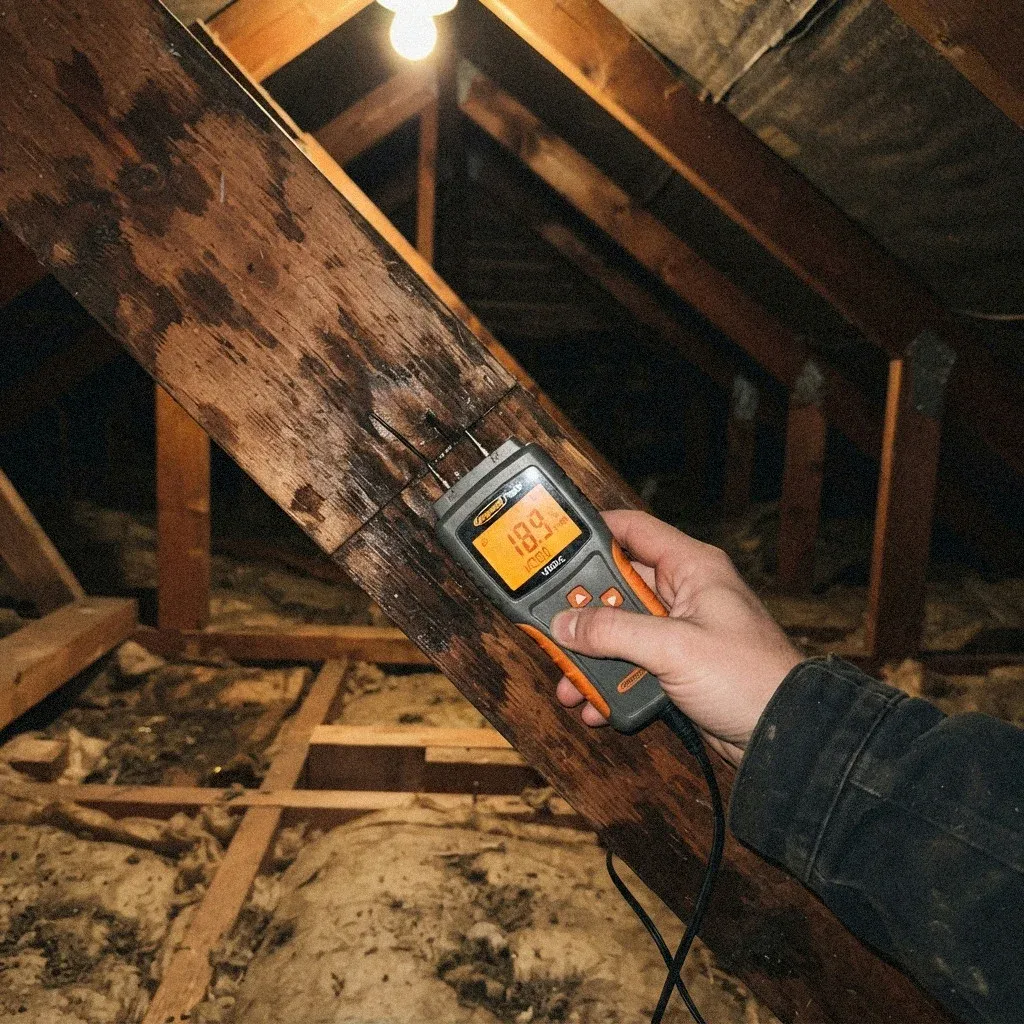
An Omaha roof inspection is a close look at shingles, flashing, the attic, and gutters, using tools like a moisture meter when needed, to catch soft spots and wear before freeze-thaw cycling turns them into leaks.
Four Reasons to Schedule One
People book an inspection for four different reasons and they are not the same job. Routine maintenance is a general condition check. A storm inspection is evidence gathering with a claim in mind. A pre-purchase inspection is a condition rating tied to a closing date. And a leak investigation is a search for one entry point. Saying which one you want changes what you get back.
Every one of the four opens with a visual inspection of the roof from ladder or ground, since that base layer doesn't change with the reason for the visit. What shifts is emphasis. A pre-purchase visit weighs remaining service life for a buyer. A post-storm visit hunts for hail bruising and wind-lifted edges tied to a dated event. A maintenance visit looks for slow wear building since the last check.
The reason matters because it sets what gets recorded. A maintenance visit notes what needs doing and when. A storm visit needs marked test squares, hit counts and dated photographs of every elevation, because that is what an adjuster reads. Asking for a maintenance inspection and then trying to use it for a claim is how people find out the difference too late.
The Full Scope of a Roof Walk
Exterior scope on an Omaha roof means checking the field for granule loss, cracked or lifted shingles, and bruising from hail, which shows up as soft, dark dimples rather than obvious holes. Homes in Dundee and Benson often carry older shingle roofs where wear from decades of freeze-thaw cycling is layered on top of any recent storm damage, so an inspector has to sort new hail marks from long-term aging.
A flashing check covers every seam the roof doesn't handle on its own: chimneys, sidewalls, skylights, and the valleys where two slopes meet. Valleys collect debris that can dam water back under shingles instead of letting it run off. A penetration survey looks specifically at pipe boots, vent stacks, and other roof penetrations, since a cracked boot is a slow, quiet leak source that rarely announces itself from the ground.
- Each slope gets viewed for missing granules, curled edges, and hail bruising, plus any soft spot signaling decking trouble underneath.
- Flashing at valleys, chimneys, and skylights gets a separate look, since these joints fail well before an open shingle field does.
- Gutters and downspouts get checked for sag and clogging, since standing water near a basement foundation is a real concern in Omaha.
- Gutters and downspouts get checked for sag, granule buildup, and pull-away from the fascia, since undersized drainage strains basements below grade.
- Plumbing stacks, roof vents, and skylight curbs get checked up close, since a cracked boot around a pipe is a common punch-through point.
- Flashing at chimneys, valleys, and skylights gets checked by hand for gaps and rust, since that's where a punch-through usually starts.
Building the Photo Report
The report is the thing you are actually paying for, and a good one is organized by roof section rather than as a stream of pictures. Each noted item should be locatable: which slope, which elevation, and what it looks like close up. A report you cannot navigate six months later, when a buyer or an adjuster asks about item four, has lost most of its value.
Attic inspection catches what a ceiling hasn't shown yet. An inspector looks at the underside of the decking for dark staining, a soft spot, or an active punch-through where a leak has gone all the way through. Rusted nail tips, compressed or missing insulation, and poor airflow at the ridge or soffits also get noted, since bad ventilation lets warm air build up and contributes to ice damming along the eaves in winter.
- Report groups photos by roof section so a homeowner can match each noted soft spot or worn flashing point to its exact location.
- A pre-purchase inspection is scheduled around a closing date, handing a buyer near West Farnam or Fairacres a condition rating to weigh against the asking price.
- A warranty inspection documents the roof's current condition against manufacturer or workmanship terms, since a missed maintenance interval can void coverage on its own.
- A warranty inspection runs on the manufacturer's schedule and documents that installation and upkeep still meet the coverage terms.
Why a Report Isn't a Bid
Gutters and downspouts get their own pass because they decide where roof water ends up, and in Omaha that matters more than in cities without basements below grade. A gutter that's pulled away from the fascia, sagging under its own weight, or missing sections isn't just a cosmetic problem; it's water landing next to a foundation wall instead of routed away from it through a working downspout.
What builds up in an Omaha gutter changes block by block. Tree-lined streets near Elmwood Park or Memorial Park shed leaves and seed pods that pack into corners and clog outlets by fall. Homes farther from mature canopy deal more with granule washout and wind-blown debris after a storm. Either way, a gutter scope during inspection checks for standing water, sagging hangers, and downspouts that discharge too close to the foundation.
| Type | Trigger | Likely Findings |
|---|---|---|
| Maintenance inspection | Owner-scheduled, no specific complaint | Runs on a maintenance interval, not an event |
| Pre-purchase inspection | Requested during a home sale | Timed to the purchase agreement deadline |
| Post-storm inspection | Triggered by hail or wind event | Booked as soon as damage is suspected |
| Warranty inspection | Required by manufacturer or workmanship terms | Set by the warranty's own schedule |
| Warranty inspection | Manufacturer or workmanship warranty claim | Ventilation gaps, improper fastening, voided coverage |
What the Rating Actually Tells You
A photo report ties each finding to a specific location on the roof, not just a general description, so a torn shingle in the northwest valley isn't confused with wear noted on the south slope months later. Photos get paired with a written note on what's visible and, where it applies, a reading from a moisture meter or infrared scan. Without that pairing, a report is just a stack of pictures nobody can act on.
Findings usually carry a condition rating, a short scale that separates cosmetic wear from something that needs attention soon. A rating on the field of the roof might read differently than one on the flashing at a chimney, even on the same roof, because materials age at different rates. Reading a report means checking which areas carry the worst ratings, not just totaling how many findings appear on the page.
Moving From Findings to Action
An inspection report and a repair bid aren't the same document, and Omaha homeowners sometimes hand one to a contractor expecting it to double as the other. The report describes what's happening on the roof right now: where it's failing, how severe each issue is, and what caused it where that's known. It doesn't set a price. A bid takes those findings and turns them into a defined scope of repair with a cost attached.
The line between the two matters most after a hail event, when more than one contractor shows up with an estimate. A report written independently of any bid gives a homeowner a fixed description of roof condition to compare those estimates against, rather than trusting whichever contractor's own inspection happens to match their own proposed scope of work most closely.
Inspections at a Glance
- Composition shingle is the dominant covering across Omaha, with older sections of Dundee and Field Club showing more slate or wood on original construction.
- Hail is concentrated in April through June here, and bruised shingles from that stretch often show up as a claim months later.
- Soft decking in an Omaha attic usually traces to trapped moisture from poor ventilation, not insect damage, given the region's freeze-thaw cycling.
- A moisture meter or infrared scan can find wet decking under a roof that looks fine from a ladder, catching a leak before ceiling stains show up inside.
- Nebraska's post-loss assignment statute affects who can act on an insurance claim, so ask before signing anything tied to storm repair work.
- Test squares, small measured sections of roof, let an inspector estimate remaining shingle life without walking every square foot near Zorinsky Lake or elsewhere in the metro.
Frequently Asked Questions
How often does an Omaha roof really need inspecting?
It depends on the roof and the reason. A maintenance inspection on an asphalt shingle roof in an established Omaha neighborhood is typically worth doing every few years. A post-storm inspection should happen soon after a hail or wind event serious enough to be noticed, since documenting damage close to the date matters for an insurance claim.
What's different about a pre-purchase roof inspection?
Does the inspector actually go into the attic?
Both, depending on what the roof shows. Every inspection starts with eyes on each slope; a moisture meter comes out if sheathing near a vent or valley looks discolored, and an infrared scan can map temperature differences across the deck when a leak's path isn't obvious from above.
When does an inspector cut into the roof itself?
Almost never on an occupied house, and only with the homeowner's consent first. Cutting a core sample means pulling a small plug through the shingles and decking to count layers or check for rot, something reserved for unusual cases, not a routine visit.
Does the report tell me what repairs will cost?
No, and that gap is intentional. The report documents condition and photos findings by location; a separate estimate follows afterward, pricing out the actual repair or reroof once the homeowner has the documentation in hand to compare against.
Know What's Actually Happening Up There
Tell the licensed pros we connect you with what prompted the call, whether it's a leak, a sale, hail, or a warranty deadline, and they'll scope the right visit.
Call (833) 566-1459