Rust streak running down the brick face
A rust-colored streak on the brick below the roofline, seen from the ground or a ladder, means water is already running down the wall face instead of staying on the shingles above it.
Late winter into spring, after the frost line eases and the ground thaws, is when a season of freeze-thaw movement shows up as a loosened joint. A fall check ahead of the first hard freeze catches flashing before another winter works it further.
Step flashing failure at brick walls happens when the overlapping metal pieces sealing a roof to a sidewall pull loose from the mortar joint or slip out from under the shingle courses, letting rain track down the wall and into the attic near that seam.
Not every roofing material ages the same way under Omaha's mix of hail, wind, and freeze-thaw swings. Some shingles are rated to take an impact and keep sealing; others need closer watching after a rough season.
A rust-colored streak on the brick below the roofline, seen from the ground or a ladder, means water is already running down the wall face instead of staying on the shingles above it.
Step flashing is meant to tuck into a mortar joint and be sealed there. A visible gap means either the seal has failed or the metal was surface-mounted and caulked instead of let into the wall. Caulk on masonry is a few years of protection at best, and this is the commonest way a brick sidewall starts leaking here.
Shingles standing proud along a wall usually mean the flashing under them was reused or forced rather than replaced. Each piece should sit under one course and over the next; when it does not, the shingle rides up on it. Lifted courses there are the visible half of a hidden flashing problem.
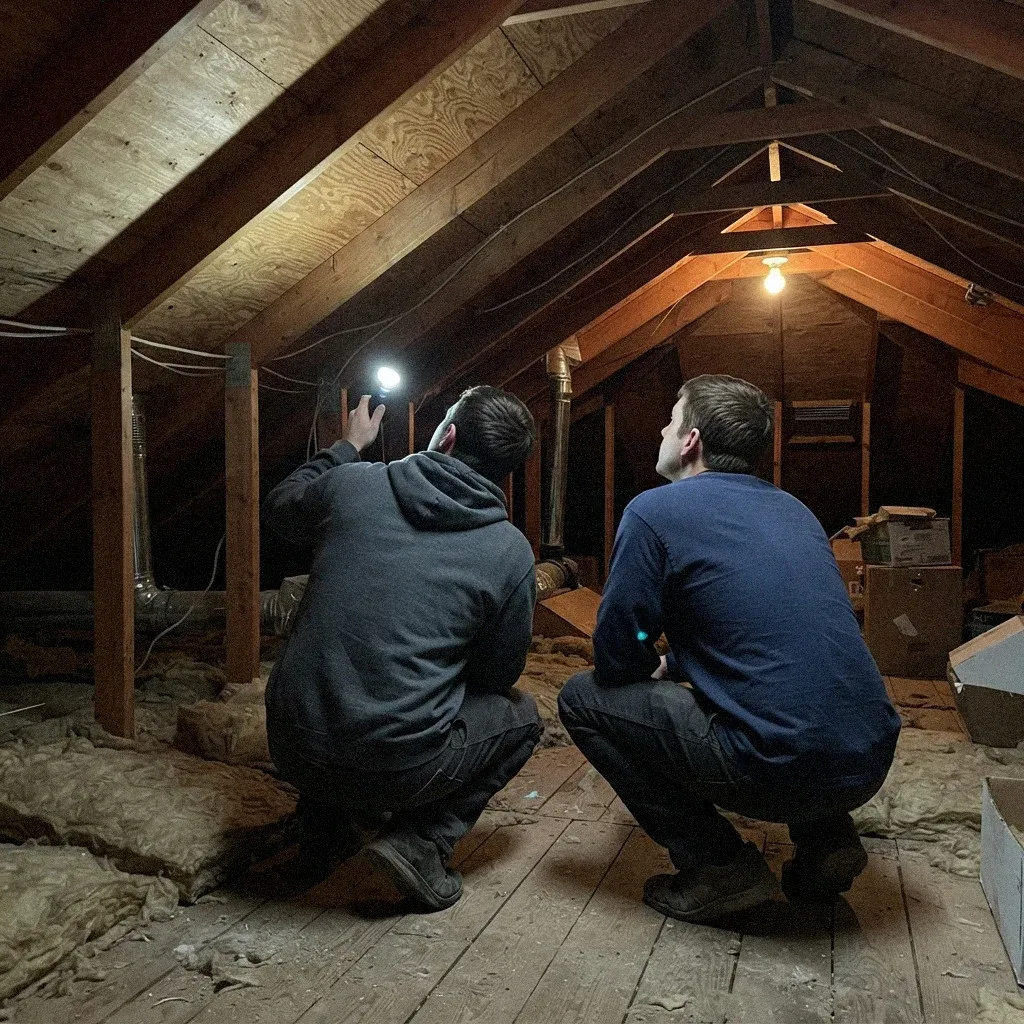
A stain on the rafter closest to a wall, rather than out in the middle of the roof, points at the wall junction. Water getting past step flashing runs down the sheathing and picks up the first framing member it meets. Follow it upward and the entry point is nearly always at the top of the flashing run.
Fine gritty dust collecting on the shingles below a wall is mortar breaking down, and it matters because the flashing depends on that joint holding it. Freeze and thaw drives it: water gets into the joint, freezes, and lifts the face off the mortar. Repointing has to happen before flashing can be sealed into it properly.
Omaha's swing between spring thaw and hard winter lows works metal step flashing loose from brick walls over time, and homes in Dundee and Benson with older tie-ins see it first.
Hail and wind events common in the April-through-June stretch loosen shingle courses near a wall seam, and homes closer to Papillion Creek see the pattern repeat after each rough season.
A roof does not fail evenly. Hail bruises the slopes facing the storm while the far side looks fine, so a one-sided inspection misses half the story. Freeze-thaw cycling through winter works on whatever hail already weakened, which is why spring often reveals damage nobody noticed months earlier.
Step flashing failure gets mistaken for a straight sealant failure at the same wall line, since both show a stain on the ceiling or wall near where the roof meets the brick. The test is checking the flashing itself from a ladder: sealant failure leaves the metal pieces intact with just cracked caulk, while step flashing failure shows bent, rusted, or separated metal at the brick joint.
The failed step flashing pieces get pulled, the mortar joint they tuck into is cleaned out, and new step flashing is woven in with each course tied under the shingle above and against fresh sealant at the brick.
The step flashing gets rebuilt course by course along the wall, tied into fresh underlayment, since new counterflashing over shingles that were never relapped correctly just fails again.
Freeze-thaw cycling does most of the quiet damage to a roof here. Water works into small cracks, freezes, expands, and repeats through winter until flashing lifts and shingles crack. That slow wear rarely shows from the ground. The licensed pros we connect you with check for it during any inspection, not just after a storm makes the damage obvious.
| Roof Condition Now | Costs More Later |
|---|---|
| Omaha roofs deal with hail more than wind-driven rain, and that changes what actually fails first. Granule loss from an April hailstorm weakens a shingle without opening it up right away, so the damage sits unnoticed until a freeze-thaw winter finds the weak spot and turns it into a leak. | Insurance adjusters here see enough hail claims each spring that they know the difference between wind-lift and hail bruising on sight. A homeowner walking into that conversation without their own read on the roof is negotiating a repair bill blind, against someone who does this every week. |
| A roof claim gets complicated fast when the homeowner, the adjuster, and the contractor all read the same shingles differently. Getting a second, licensed opinion before signing anything keeps the estimate grounded in what the roof actually needs, not what any one party wants it to need. | Freeze-thaw is the quiet damage here, not the dramatic kind. Water works into small gaps, freezes, expands, and widens them, then thaws and does it again the next week. A shingle edge or flashing seam that could handle one hard freeze rarely holds up through a whole winter of them. |
| Hail doesn't always leave a hole you can see from the driveway. It can bruise a shingle's mat without breaking the surface, and that bruise keeps losing granules long after the storm passes. An insurance adjuster or a roofer trained to spot bruising can tell the difference between cosmetic marks and real functional damage. | Gutters matter more here than in drier places, because so many older homes have a finished basement below grade. A roof that sheds water poorly doesn't just risk the attic — it can push water toward a foundation that was never built to take it. Drainage is part of the roof's job. |
A homeowner can watch for a rust streak on the brick or a stain on the attic rafters nearest the wall with a flashlight, but resetting flashing into a mortar joint takes somebody on the roof, and that part belongs to the licensed pros we connect you with.
Left alone, water working past the step flashing tracks down the wall cavity toward the eave and framing below, and Omaha's freeze-thaw cycling keeps widening the gap each winter. Years of this can rot the wall sheathing and framing behind the brick.
A guide figure for step flashing failure at brick walls locally is an estimated $350 to $1900, which is a band rather than a quote. Omaha's freeze-thaw cycling, not insect activity, drives most hidden roof damage found around Dundee and Benson. The eastern subterranean termite is the local species, entering through soil contact, but it rarely factors into a reroof estimate here. The licensed pros we connect you with usually flag ice-dam and flashing wear before pest damage. pricing guide, and the service that handles this is Flashing & Chimney Repair.
Roof Defects. Soft and delaminated decking is roof sheathing that has absorbed moisture until the wood weakens or its layers separate, usually from a leak overhead, showing up as a spongy spot, sag, or peeling plywood in the attic.
Storm and Hail Damage. Hail-dented roof vents and caps are metal exhaust or ridge caps punched with small round dents by hailstones.
Storm Damage. Ridge cap loss in straight-line wind is when gusts pry the narrow cap shingles off the roof's peak, exposing the underlayment and nail line along the ridge to rain and further wind damage.
Usually yes. Repairing or replacing step flashing along a brick wall as part of a larger reroof falls under the City of Omaha Planning Department's permit process, but a small flashing-only repair on an otherwise sound roof is often treated as minor maintenance. Confirm the scope with the licensed pros we connect you with before work starts.
Rarely by itself. Step flashing tucked against a brick wall can work loose from age, freeze-thaw movement, or a mortar joint that was never repointed, without any damage to the shingles around it. Check the wall seam from the attic and from a ladder before assuming the whole roof covering needs work.
The joint failure stays put, but water doesn't. Once rain gets behind step flashing near a Dundee or Field Club brick wall, it can run down the sheathing and reach framing several feet below the original gap. Check the attic under that wall after a hard rain for a stain that extends past the flashing line.
Not always. A single damp mark after one hard spring downpour can be wind-driven rain finding a gap before it dries out. A stain that comes back after every rain, or that grows between storms, means the step flashing behind that wall seam has already failed.
Most roof problems don't start with a dramatic leak. They start with a granule pile in the downspout, a nail backing out under a ridge cap, or flashing that's pulled loose after enough freeze-thaw cycles. None of that looks urgent from below. By the time water reaches drywall, the roof has usually been failing for months.
Call (833) 566-1459