Getting an Omaha Hail Claim Paid in Full
How Omaha homeowners move from hail damage to a paid claim, step by step.
An Omaha hail claim gets paid in full by documenting damage fast, meeting the field adjuster with your own photos and a contractor estimate, and pushing back with a supplement if the scope of loss misses items. Deductible and depreciation still apply.
What Your Policy Actually Pays For
An Omaha roof claim turns on cause, not condition. A covered peril, hail off a spring storm cell or wind that tears shingles loose, gets paid. A roof that simply aged out under decades of freeze-thaw cycling does not; insurers call that a wear and tear exclusion and deny on it fast. The adjuster who walks a roof in Dundee or Millard is looking for that distinction first, before any dollar figure enters the conversation. Everything downstream of the claim depends on which side of that line the damage falls.
Most Omaha policies pay replacement cost value, meaning the insurer eventually covers what a new roof actually costs, but the first check often reflects actual cash value instead, the depreciated worth of the old roof. The gap between those two numbers is the depreciation holdback, released only after the repair is finished and proof of the completed work is sent back to the carrier. Homeowners who assume the first check is the final payment are usually leaving money on the table.
The deductible comes out before any of that math starts, and it applies the same whether the house sits in South Omaha or out past Elkhorn. Some Nebraska policies carry a flat dollar deductible, others a separate wind or hail percentage deductible that runs higher than the standard one. A homeowner should know which type their policy carries before a storm hits, not after, since it changes what a claim is even worth pursuing.
Building Your Own Damage Record First
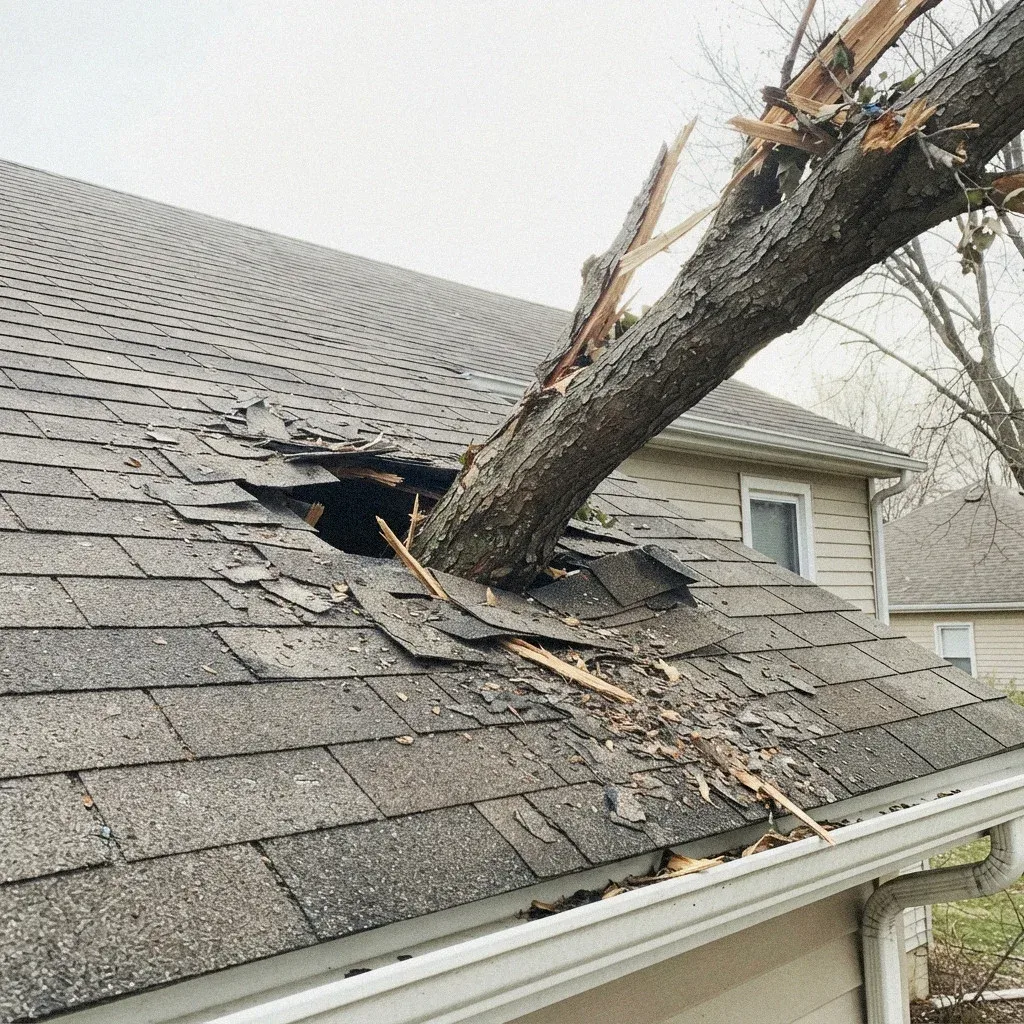
Start documenting an Omaha roof claim before any tarp goes on or debris comes off the lawn, because that first look at shingles matters more than anything written later. Photograph every slope from the ground and, if it is safe, from a ladder, plus gutters, downspouts, and any granule buildup below. Note the date the damage was first noticed against the date of the storm. Insurers weigh timing heavily when a hailstorm moved through Douglas County weeks before anyone called.
Write down the date you first noticed damage, the storm date if known, and every conversation with the insurer, noting names and what was said. Omaha's spring hail runs April through June, so a dated record ties damage to a specific event rather than months of freeze-thaw wear the insurer can point to instead. This record backs up your photos if the claim gets questioned later.
- Photograph every slope from the ground first; hail bruises and torn shingles on an Omaha roof rarely show clearly once the sun bleaches them for a week.
- Wear and tear exclusion means age-related shingle breakdown from freeze-thaw cycling is routinely denied, not paid.
- The deductible comes out once per claim; depreciation holdback is the separate amount kept back until repairs are done.
- The scope of loss is the adjuster's line item estimate of damaged items and repair costs, the document both sides negotiate from.
- Proof of loss is your signed, itemized claim statement, and submitting it starts the insurer's response clock running.
- A mortgage endorsement adds your lender's name to the claim check alongside yours on an Omaha home.
What Happens When the Adjuster Comes
The field adjuster's visit in Omaha decides most of what happens next. They climb onto the roof, photograph the wear pattern, and write a scope of loss listing every material and labor item the insurer will pay for. A thin scope is common on older homes in Dundee or Benson, where layered roofing and hidden decking damage are easy to miss from a quick walk of the slopes.
When the scope of loss skips damage or prices it too low, a homeowner can ask for a supplement, a written request to add line items or correct the estimate. This is routine, not confrontational, and it usually comes from comparing the adjuster's line item estimate against an independent one written by a roofing contractor who actually walked the same roof and measured the same slopes.
- Photograph shingle bruising, granule loss, and gutter dents from the ground before any tarp or repair covers the evidence.
- Record the date you noticed damage and which spring storm or wind event likely caused it.
- Walk the property with the field adjuster if your schedule allows, and point out any spots you already marked before their visit.
- Save receipts for any temporary tarp work, since most policies expect reasonable steps to limit further damage.
Two Payout Methods, One Big Gap
Replacement cost value and actual cash value are not just two numbers on the same claim. RCV pays what a new roof actually costs; ACV subtracts depreciation for the roof's age first, holding that portion back. Omaha homeowners with older shingles, from Dundee to Benson, often see a bigger gap between the two figures than they expect. Depreciation holdback releases once the licensed pros we connect you with document completed work, so a low first check is not the final word.
A claim denial is not the end of it. Nebraska policies typically include an appraisal clause, where each side names an appraiser to independently value the disputed damage, and a neutral umpire settles disagreements between them. Short of that, a homeowner can ask for a reinspection, request a supervisor review the file, or file a complaint with the Nebraska Department of Insurance. None of these guarantee a reversal, but a denial is rarely the last word available.
| Basis | Payout Timing | What Insurer Pays |
|---|---|---|
| How payout is calculated | Pays to rebuild at today's material cost | Replacement cost minus age-based depreciation |
| Money in hand now | Depreciated amount, deductible already subtracted | Depreciated amount, often the only payment |
| Remaining funds | Recoverable depreciation, released after roof is done | Not recoverable under this coverage type |
| Matters most when | Homeowner plans to actually rebuild the roof | Owner banks the check, skips the reroof |
| Where it's written | Dwelling coverage line on the declarations page | Dwelling coverage line on the declarations page |
When the Scope Comes In Short
A field adjuster working a Douglas County hail claim after an April storm sometimes leaves out damaged ridge cap, a section of gutter, or flashing tied to a chimney the ladder never reached. That gap shows up once the licensed pros we connect you with tear off the old roof and see what the deck and edges actually need. Catching it before work starts keeps the repair from stalling mid-project over money the estimate never counted.
A roofing contractor's role in the claim is technical: measuring the roof, photographing the deck and flashing, and writing an estimate that the adjuster's scope can be checked against. If the two estimates stay far apart after a supplement request, the policy's appraisal clause lets each side pick an appraiser to settle the price, a step used rarely around Omaha but worth knowing before signing anything with a contractor.
Options Once the First Answer Falls Short
Timing matters as much as paperwork. Hail season in the Omaha area concentrates in spring and early summer, and a claim filed right after an April or May storm moves through a system already backed up with hundreds of other claims from the same event. A roof damaged near the Papillion Creek watershed in June may not see an adjuster for weeks during a busy stretch, and a temporary tarp bought at that point is often the difference between a contained leak and a bigger interior repair.
None of this guarantees a specific outcome, and nothing here is legal advice about a particular denial or policy. What holds up across most Omaha claims is documentation done early, a scope of loss checked line by line against an independent estimate, and a willingness to request a supplement or reinspection rather than accept the first number offered. The contractor's estimate and the insurer's scope of loss should end up close before a homeowner signs off on either one.
Where Douglas County Claims Get Stuck
- Nebraska's Department of Insurance publishes guidance on post-loss assignment of benefits before you sign anything over.
- Reinspection is worth requesting when new damage shows up or the adjuster missed a slope on the first visit.
- An appraisal clause lets each side hire an independent appraiser to settle a dollar dispute without a lawsuit.
- A public adjuster in Nebraska is licensed separately from a contractor and is paid from your settlement, not by the insurer.
- The licensed pros we connect you with can flag missed damage for a supplement, but the paperwork itself goes through your insurer.
- A supplement is a follow-up request covering damage the first scope missed, like flashing near a Dundee or Benson chimney.
Frequently Asked Questions
Does my Omaha roof damage even qualify as a covered peril?
Only if the damage traces back to a specific event, like wind off a spring storm that creased shingles along one slope or hail that bruised the mat in a scattered pattern. A roof that is simply old, curling, or losing granules evenly across every slope reads as ordinary aging, and insurers in the Omaha area typically decline that under the policy's own aging exclusion.
What does the adjuster actually check on my roof?
A field adjuster walks the roof, checks the attic if needed, and photographs whatever hail or wind marks are present, then drafts a scope of loss with pricing per line item. Around Omaha, adjusters look closely at whether the pattern matches a specific spring storm or points to years of freeze-thaw wear instead.
What is a supplement and when do I need one?
Once your Omaha claim is open, the field adjuster's scope sometimes misses damage, like a torn-up section of soffit or a run of step flashing near a dormer that only shows once the old shingles come off. A supplement is the paperwork that sends those missed items back to the insurer for a second look, tied to photos and measurements from the licensed pros we connect you with, not a separate claim.
Should I sign an assignment of benefits form?
Nebraska regulates post-loss assignment of benefits under state statute, and the Nebraska Department of Insurance publishes guidance on what signing one means before you do it. An assignment can hand a contractor the right to bill and negotiate directly with your insurer. Read it fully, ask what it gives up, and don't sign under pressure at the door.
What if the insurer's payout seems too low?
You can ask for reinspection, use the appraisal clause if the policy has one, or raise the dispute with the Nebraska Department of Insurance. A public adjuster can also step in to press the case if the disagreement is over the dollar amount rather than whether the peril is covered.
Want a Second Set of Eyes on the Scope?
Have the licensed pros we connect you with document your roof before the adjuster's visit.
Call (833) 566-1459