Temperature Swings And What They Loosen
Omaha nights routinely drop into the teens through the coldest stretch of winter, and that gap between a warm attic floor and a cold roof deck is exactly what turns ordinary household humidity into frost on the underside of the sheathing.
Omaha basements sit warm below grade, and heated air rises into attics through gaps around light fixtures and attic hatches. With soffit and ridge vents blocked or undersized, that moist air meets cold sheathing instead of escaping, and frost builds through the freeze-thaw months.
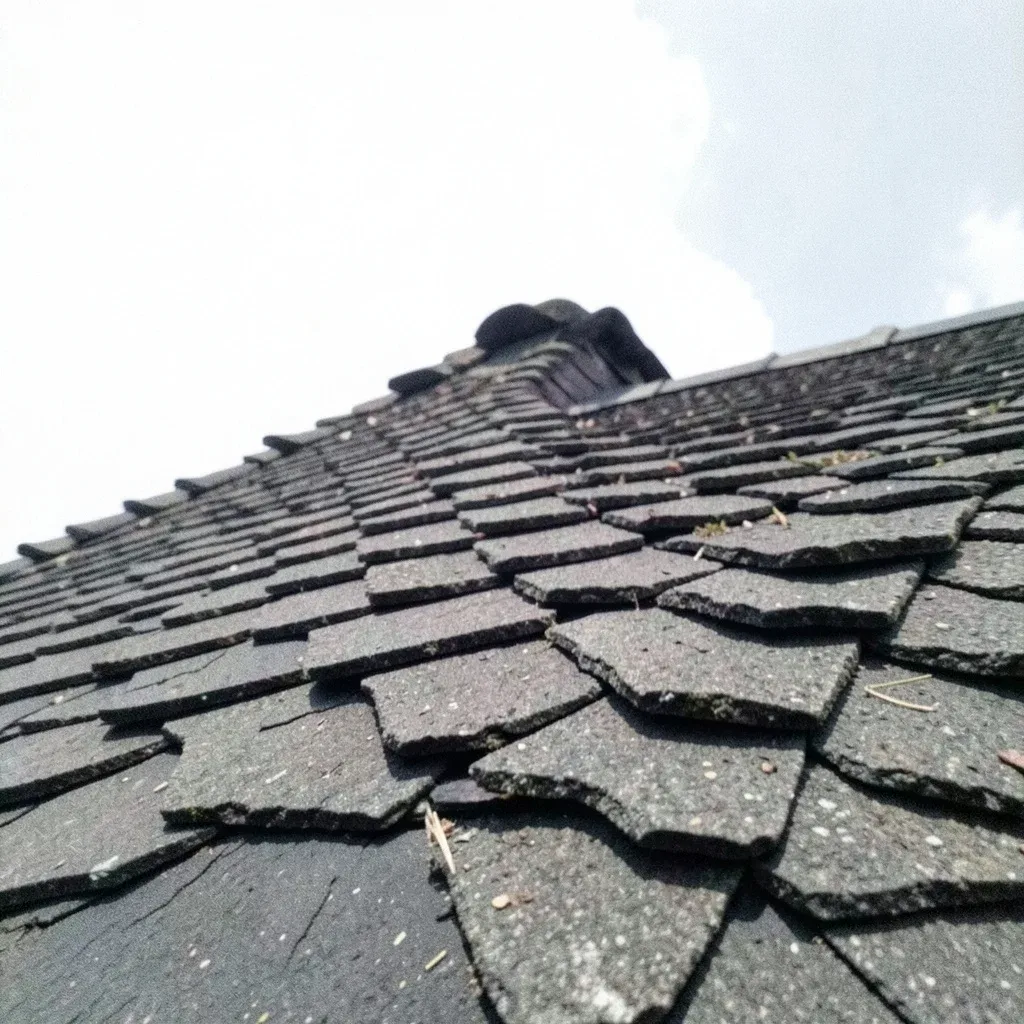
Omaha roofs age on a schedule set by temperature swings, not calendar years. A shingle that flexes fine in June can crack in January after enough freeze-thaw cycles. Hail adds its own timeline, often invisible until a slope is checked closely. Regular attention catches wear before a ceiling stain forces the issue.
Weather Patterns That Wear Roofs Down
- Location
- Across the underside of roof sheathing near the ridge, most visible on the north-facing slope where attic air runs coldest.
- Appearance
- White frost or ice crystals on nail points and plywood grain, visible with a flashlight on a cold attic morning.
- Cause
- Warm, humid household air escaping into an attic with blocked soffit intake or insufficient ridge exhaust.
- Progression
- Wet insulation, mold growth on framing, and softened or delaminated decking if the moisture cycle repeats each winter.
- If Ignored
- Ignored, moisture soaks insulation, cuts its R-value, and can rot decking and rafters near the ridge before any ceiling stain appears in Omaha.
- Active period
- Check the attic in the coldest stretch of winter, December through February, when frost is easiest to see on a cold morning before it melts. A fix made before then works dry; one made after a thaw means drying out soaked decking first.
- Typical repair
- an estimated $450–$2600
Reading an Insurance Adjuster's Report
Homeowners confuse this with an active roof leak, since both leave dark ceiling staining near Dundee or Benson attics. Timing separates them: a leak tracks to one penetration and appears with rain, while frost buildup forms broadly across cold nail heads and sheathing after a hard freeze, then drips only once temperatures climb back above freezing. Check the timing and the pattern first. A leak shows up during or right after rain and stays local to a flashing point, valley, or vent. Frost-driven damp appears after a cold stretch, spreads across a wide section of decking, and often peaks near the ridge.
Matching New Material to an Existing Roof
A proper fix clears soffit intake vents, adds baffles to keep insulation from blocking that airflow path, and confirms exhaust vents at the ridge or roof are sized to match, so outside air actually moves across the underside of the deck.
Running a space heater or dehumidifier in the attic only masks the moisture for as long as it runs. It does nothing about the airflow gap that let warm, damp air reach the cold deck in the first place, and frost returns the next cold night.
Older homes carry original roofing that's outlasted its warranty even if it looks fine, while newer builds sometimes have shortcuts from a fast construction schedule. Neither age nor newness tells the whole story. The licensed pros we connect you with base a recommendation on what the roof itself shows, not on the year the house was built.
INSURANCE CLAIM TIMELINE VS. OUT-OF-POCKET REPAIR TIMELINE
| Roof Condition Now |
Costs More Later |
|---|
| Omaha roofs deal with hail more than wind-driven rain, and that changes what actually fails first. Granule loss from an April hailstorm weakens a shingle without opening it up right away, so the damage sits unnoticed until a freeze-thaw winter finds the weak spot and turns it into a leak. | Insurance adjusters here see enough hail claims each spring that they know the difference between wind-lift and hail bruising on sight. A homeowner walking into that conversation without their own read on the roof is negotiating a repair bill blind, against someone who does this every week. |
| A roof claim gets complicated fast when the homeowner, the adjuster, and the contractor all read the same shingles differently. Getting a second, licensed opinion before signing anything keeps the estimate grounded in what the roof actually needs, not what any one party wants it to need. | Freeze-thaw is the quiet damage here, not the dramatic kind. Water works into small gaps, freezes, expands, and widens them, then thaws and does it again the next week. A shingle edge or flashing seam that could handle one hard freeze rarely holds up through a whole winter of them. |
| Hail doesn't always leave a hole you can see from the driveway. It can bruise a shingle's mat without breaking the surface, and that bruise keeps losing granules long after the storm passes. An insurance adjuster or a roofer trained to spot bruising can tell the difference between cosmetic marks and real functional damage. | Gutters matter more here than in drier places, because so many older homes have a finished basement below grade. A roof that sheds water poorly doesn't just risk the attic — it can push water toward a foundation that was never built to take it. Drainage is part of the roof's job. |
Tarps, Buckets, And Other Short-Term Fixes
From the ground, watch for icicles forming unevenly along the eave after a cold snap, a sign warm air is escaping upward. The attic check belongs to a professional: frost on nail tips or sheathing needs a flashlight inspection the licensed pros we connect you with can safely perform.
How Hail Damage Actually Shows Up
Damp sheathing that stays wet through repeated freeze-thaw cycles gives mold a surface to grow on, and prolonged dampness in insulation reduces its effectiveness, letting more heat escape upward and feeding the same cycle that caused the frost in the first place.
Ready To Talk To A Local Pro?
A guide figure for attic frost and damp sheathing locally is an estimated $450 to $2600, which is a band rather than a quote. Omaha's freeze-thaw cycling, not insect activity, drives most hidden roof damage found around Dundee and Benson. The eastern subterranean termite is the local species, entering through soil contact, but it rarely factors into a reroof estimate here. The licensed pros we connect you with usually flag ice-dam and flashing wear before pest damage. pricing guide, and the service that handles this is Roof Ventilation & Attic Airflow.