Temperature Swings And What They Loosen
Standing seam shows up on newer builds across Elkhorn and West Omaha and on older Dundee homes where an owner wants a long-lived covering after hail damage forces a full tear-off. Its steep run off the ridge suits Omaha's gabled and hip roof shapes well.
It also appears on additions and porch roofs near a low-slope main roof finished in a different covering, since standing seam sheds Omaha's spring downpours fast without holding the moisture that builds under cedar shake or aging rolled roofing.
Half of what shortens an Omaha roof happens under it. Warm air rising from a full basement and a heated house collects in the attic, and if the soffit intake is blocked it has nowhere to go, so it bakes the deck in July and condenses on it in January. Two roofs on the same street, one venting properly and one not, will not reach the same age together.
Choosing Materials That Hold Up
- Service Life
- A steel or aluminum standing seam roof in Omaha typically runs 40 to 60 years, well past architectural shingle and cedar shake in the same freeze-thaw climate.
- Panel Weight
- Standing seam panels run about one pound per square foot, far lighter than concrete or clay tile and easier on older Omaha rafters.
- Minimum Slope
- Standing seam can shed water down to about 3:12 with proper flashing, where exposed fastener panel and most shingle profiles want closer to 4:12.
- Walkability
- Walkable if the licensed pros we connect you with step along the structural ribs rather than the flat pan, which can dent under concentrated weight.
- Repair Method
- A dented or scratched panel is usually pulled and replaced whole, since matching factory paint on a patch rarely holds up next to the original finish.
- Season
- Standing seam installation in Omaha works best outside the heaviest spring hail months, since fastening the clips and sealing flashing both go tighter in dry, moderate weather. A wet tear-off during an April downpour risks water reaching the deck before underlayment goes down.
- Usual range
- an estimated $18000–$45000
Why Hail Damage Hides Until Spring
Standing seam gets mistaken for exposed fastener panel roofing, since both are metal, and sometimes for synthetic slate at a distance. The tall, narrow seam running the full slope is the giveaway that separates it from a flat-fastened panel or a stamped shingle-look product. Exposed fastener panels screw through the face at each rib, while standing seam hides its fastening under a raised, interlocking seam with no exposed screws. Shingle, cedar shake, and rolled roofing all lay in overlapping courses instead of running full-length panels eave to ridge.
What to Settle Before Anyone Climbs Up
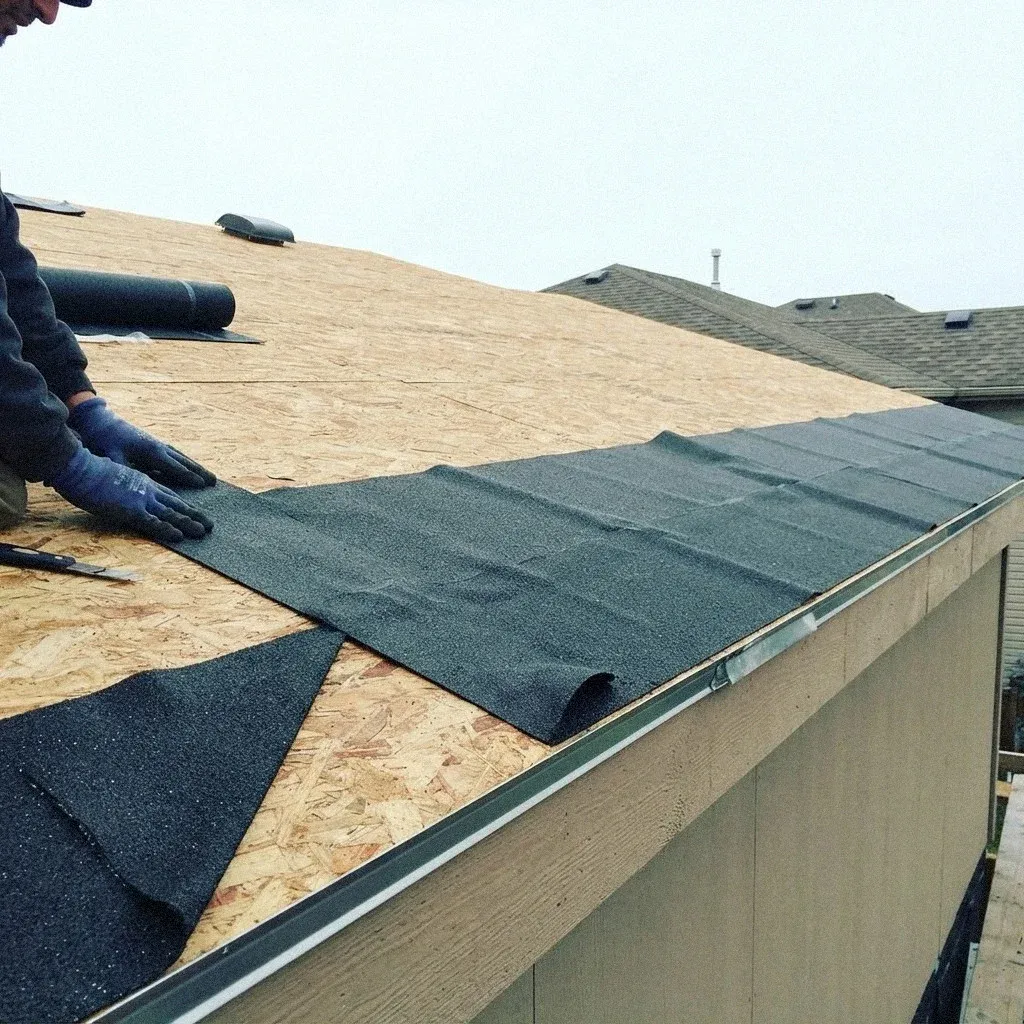
A standing seam reroof in Omaha starts with stripping the old roofing down to bare decking, since the panels rely on a flat, solid surface to seam correctly. Crews check the deck for rot from prior leaks, then run underlayment before locking panels edge to edge with concealed clips, no exposed fasteners on the field.
Underlayment goes down across the deck, then factory-formed panels run from eave to ridge with hidden clips locking each seam. Flashing gets custom-built at every valley, chimney, and skylight before the ridge cap closes out the run.
Freeze-thaw cycling does most of the quiet damage to a roof here. Water works into small cracks, freezes, expands, and repeats through winter until flashing lifts and shingles crack. That slow wear rarely shows from the ground. The licensed pros we connect you with check for it during any inspection, not just after a storm makes the damage obvious.
REPLACEMENT VS. REPAIR: WHAT THE DAMAGE PATTERN DECIDES
| Roof Condition Now |
Costs More Later |
|---|
| Small openings do more damage than big ones over time. Nail heads, vent boots, and the seams around anything mounted on the roof loosen gradually under repeated freezing and thawing, letting moisture work its way in long before anyone notices a problem indoors. | Spring hail is the claim most Omaha roofs file, but wind gets less credit than it deserves. A gust that lifts one shingle tab lets the next storm's rain track sideways under the row above it, and that damage sits invisible in the attic for months before a ceiling stain shows it. |
| Hail season here runs concentrated and fast, not spread out over months. A single spring storm can bruise or crack shingles across an entire roof in minutes, and the damage is often invisible from the ground until someone gets up close. | A roof and an insurance claim don't always agree on what happened. Wind can lift shingles without a single one going missing, and hail can bruise a mat without cracking it visibly. Getting a straight answer on which is which matters more than getting a fast one. |
| Roof wear here rarely announces itself. Temperature swings through the seasons flex shingles and flashing, loosening seals a little more each cycle. By the time a ceiling stain or a soft spot shows up, the underlying damage has usually been building for a while. A yearly look from the ground catches problems before they turn into a bigger repair bill. | A roof carries snow load, wind uplift, and hail impact in the same year, sometimes the same week. Each stresses the roof differently, and damage from one often hides the damage from another until an inspection separates them out. That's why a walk-through after any rough season matters. |
Permit ThresholdsThis page covers standing seam roofing generally. A reroof in Omaha goes through the City of Omaha Planning Department's permit process, and any insurance claim tied to hail or wind damage falls under Nebraska's post-loss assignment statute rather than another state's rules.
Gutters, Basements, and Where Water Goes
A dented or scratched panel is swapped out as a full section rather than patched, since matching a factory coating and seam profile after the fact rarely holds up. Hail can dent panels without breaking the finish, so a damaged run gets replaced end to end, not spot-repaired.
Checking Your Own Roof From The Ground
Standing seam is not a homeowner install. Snapping panels together at the right seam height and cutting clean valleys and ridges takes a seaming tool most garages don't have, and a bad crimp opens the roof to leaks fast. The licensed pros we connect you with carry that equipment and know the fastening pattern.
What Freeze-Thaw Cycling Does to Shingles
A sound standing seam roof sheds Omaha's spring rain fast enough that little moisture sits on the surface, so algae and moss rarely take hold the way they can on shingle or cedar shake. That keeps the deck below drier through winter freeze-thaw stretches.
Let's Get Your Roof On A Timeline
Putting right standing seam metal roofs usually runs an estimated $18000 to $45000. That is a budgeting figure, not a price. Omaha's freeze-thaw cycling, not insect activity, drives most hidden roof damage found around Dundee and Benson. The eastern subterranean termite is the local species, entering through soil contact, but it rarely factors into a reroof estimate here. The licensed pros we connect you with usually flag ice-dam and flashing wear before pest damage. pricing guide, and the service that handles this is Roof Replacement.